During the development, construction and operation phases, the project will create impacts on the environment and community in both positive and negative directions. A comprehensive assessment process has been, is and will be carried out to determine the impacts and benefits associated with project activities and how to deal with them during the planning, design, construction stages. construction and operation of the project. The goal of this process is to reduce negative impacts and enhance the benefits or positive effects of any intended activity. Planned mitigation measures will be described and additional control measures will be recommended if impacts are still considered unacceptable.
COMPLIANCE WITH IFC STANDARDS TO ELEVATE ESIA REPORT
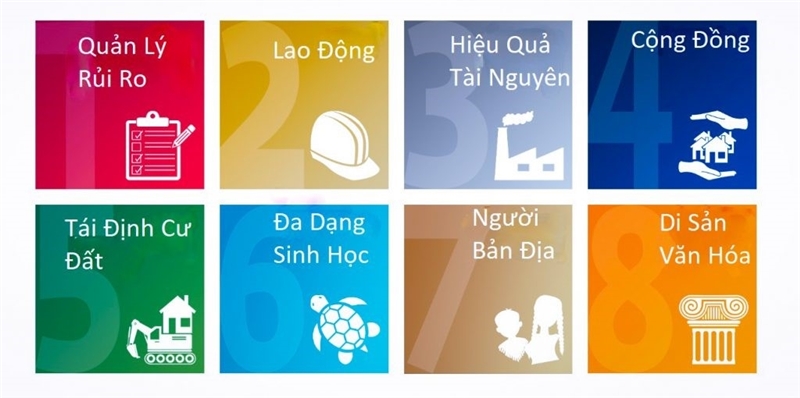
The Environmental and Social Impact Assessment (ESIA) report is prepared according to the standards of International Finance Corporation (IFC), a member of the World Bank (October 2018 version); with the goal of identifying and assessing the environmental and social impacts and risks of the project at the area where the project is built, and at the same time providing mitigation measures and guidelines for monitoring the risks, this impact during project preparation, construction and operation.
Prior to the measurement, the preparation and approval of the Environmental Impact Assessment report (EIA) was carried out in accordance with Vietnamese law with the aim of protecting the environment and the community from environmental and social impacts. potential opportunities during the construction and operation of the project. Within the framework of the EIA report preparation, we have forecast and assessed the impact on the environment and community around the project area, as well as the working environment of employees during the construction and construction phase. project operation. On that basis, the EIA identifies and proposes possible measures to minimize, prevent and monitor the potential impacts analysed in the EIA Report.
HOW WE MINIMISED THE IMPACTS
· Reduce ground noise to a minimum
· Make detailed topographic maps.
· Reduce environmental impact during construction if possible.
· Assess wildlife habitat (including birds and bats).
· Studies on rare, threatened and endangered species.
· Noise impact assessment.
· Study the flickering shadow effect.
· Ensure public safety.
· Minimize impact on cultural resources.
· Maintain water quality.